But a Bucket company has 5 challenges
As with everything you do there are challenges. These are the 5 issues with a bucket company:
1. Pay the income physically into the bucket company's bank account
So you decide to distribute Family Trust income to the bucket company.
You must now do two things:
- you complete a Family Trust distribution statement; and
- then physically transfer the money into the bucket company’s bank account. This is before lodging the tax return.
You, therefore, need to have the actual cash in the Family Trust bank account. But rarely does a Family Trust have such 'lazy money' sitting in cash.
So if there is not enough cash you need a Division 7A Loan.
2. Division 7A Loan Deed for a Bucket company
When a trust or a human owes money to a company then you need a Division 7A Loan Deed.
When a Family Trust fails to pay all the income to the bucket company then you need a Div 7A Loan Deed. The Div 7A loan agreement is a loan between:
- the family trust that is distributing the income; - but actually does not physically pay the income; and
- the bucket company that has not actually been paid the Family Trust distribution income
If the family trust doesn’t pay all the distributions in cash before the tax return is lodged, then a Div 7A loan is required.
A Div 7A loan:
- Has a maximum term of 7 years
- Has a minimum annual repayment plan
- Has interest that is payable at a rate set by the government each financial year
- The minimum repayments can be met by the Family Trust physically making payments to the bucket company each year. However, it is possible for the bucket company to declare dividends that are offset against the minimum repayment obligation. Obviously, speak with your accountant first.
3. Hard to get money out of a bucket company
Money is 'trapped' in a company. This includes a bucket company.
As can be seen above with Div 7A you cannot just take money out of a company.
One way to get money out of the company is to pay a dividend to the shareholder of the bucket company. The dividend is already taxed at the company tax rate. Therefore, the shareholder gets a (franking) credit on the tax already paid.
Example of a bucket company distribution:
The bucket company paid tax on the income many years ago at 30%. The imputation or franking credit is, therefore, 30%. The company declares a dividend to Mum. Mum's tax rate is 47%. But the bucket company has already paid 30%. So Mum just pays the difference. This is 17%. So Mum just pays 17% of the dividend from the bucket company.
Mum is now retired. If Mum has a low income because she is now retired then she can, over time, drip-feed dividends into her name. This is with a potential tax rate of zero. And the government often may give you back the franking credit.
4. Who owns the shares in the bucket company?
As we saw above, the wealth of a company is trapped.
A common way to get money out of the bucket company is to declare a dividend. But only shareholders can get a dividend.
There are also asset protection issues.
Commonly, you follow the 'man of straw and woman of substance' asset protection strategy.
Dad runs the business and is at risk. Mum does not take on the risk of the business. Mum, therefore, holds all the good assets. This includes shares in a company. Therefore, Mum holds the shares in the bucket company.
Alternatively set up yet another separate Family Trust. This is to hold the shares of the bucket company. But you need to think long and hard. Every company and trust you set up has to be looked after. There are more accounting fees each year. And a Family Trust deed needs to be updated every 5 - 7 years.
Another trust is another mouth to feed.
Your accountant needs to conduct a benefit analysis.
You should also talk to your accountant about other ways to get money out of the company. These may include winding up the company, employing family members and service trust agreements. Legal Consolidated does provide advice in this area.
5. What do you do with the money in the bucket company?
You saved tax by distributing money to a bucket company. Congratulations. But now you have a pile of cash sitting in the bucket company.
Cash from the Family Trust that is now in the bucket company needs to be invested.
The bucket company is now an investment company. It seeks to generate an income source for the shareholder.
But, often, a company may not be the best vehicle to hold 'appreciating' assets.
When a human or a trust sells an asset they often reduce their capital gain, automatically, by 50%. This is when they hold that asset for over 12 months. This may be one of the reasons why your accountant wanted you to set up a Family Trust in the first place.
But, sadly, companies do not get that capital gains tax relief.
What you get in the Legal Consolidated bucket company
Included in the above price you get:
- start building your bucket company for free. The hints and training videos guide you. Telephone us for legal advice on how to answer the questions
- the law firm oversees the incorporation process with ASIC - every step of the way
- the law firm meets and speaks with ASIC regarding your company name, as required
- includes:
- all ASIC incorporation fees
- Certificate of Incorporation
- Australian Company Number (ACN)
- comes with the law firm letter:
- confirms a law firm prepared for your beneficiary company
- show you how to get a free ABN, TFN and GST
- cutting-edge Company Constitution contains:
- Division 7A Loan Agreement - required by all company beneficiaries of a family trust
- tag along, share buybacks and pre-emptive rights - helps with succession planning after you die
- accountant-friendly, GAAP-compliant valuation powers
- profit distributions, even when there is no ‘profit’ for ATO purposes - important for companies taking income from a family trust
- over 30 different classes of shares, including preference shares
- permits electronic:
- meetings and signatures
- storage of secretarial file
- no need for annual meetings
- allows single directors - directors can be treated as employees as a way to get money out of the bucket company
- no company seal required
- can be used to take income from the Family Trust and then invest or operate a business or lend money to a related person
- personalised Share certificates
- minutes, registers and consents, including:
- Company Officer registers
- Company Officer consent forms
- Application of shares


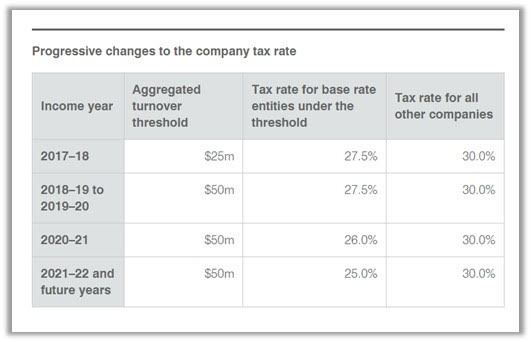 The maximum rate that a corporate beneficiary can use to frank dividends is its corporate tax rate. This is for imputation purposes. It is worked out based on the bucket company’s position in the previous year. It is either: